
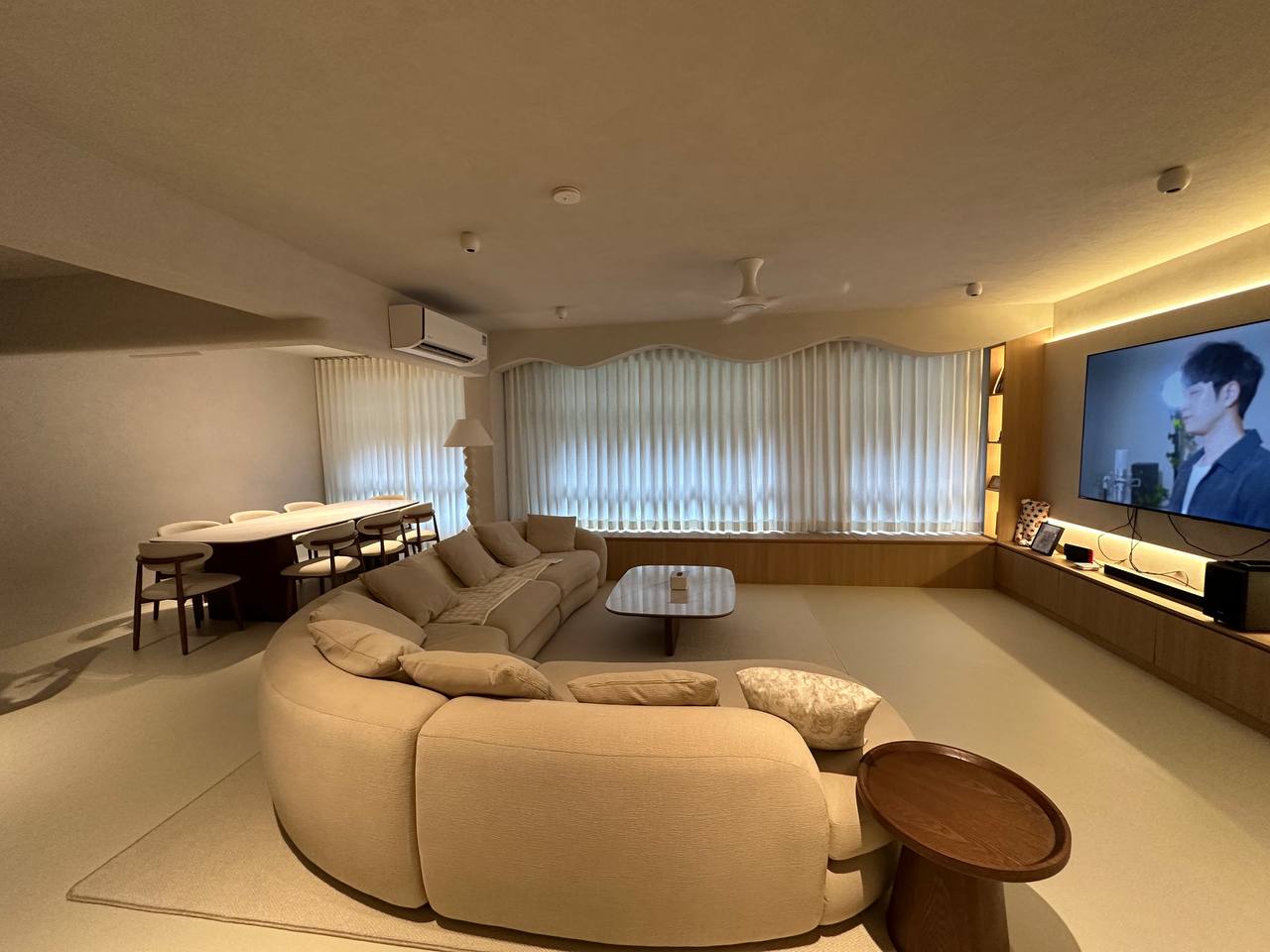
Open concept curtains can help create a more consistent look across connected living and dining spaces. This is especially useful in Singapore HDB flats and condos where several areas may share the same visual space. Without walls separating each area, window treatments become part of the overall interior rather than an isolated feature. Different curtain colours, fabrics or installation heights can make a connected space look unnecessarily busy. The goal does not mean making every window identical. Instead, good planning helps the different window treatments feel related while still meeting the practical needs of each area.
Why Open Concept Curtains Need Coordination
An open-concept layout allows you to see several parts of the home at the same time. From the living room, you may also see the dining area, balcony and even part of the kitchen. This means curtains across different windows can influence the overall appearance of the space. If one window has full-height neutral curtains while another uses a completely different colour, length and heading style, the room may lose some visual consistency. Planning the windows together can create a calmer and more connected interior.
Start With the Largest Window
When planning open concept curtains, start with the largest or most visually prominent window. In many Singapore homes, this will be the living-room window or the glass area facing the balcony. Because this window occupies more visual space, its curtain will naturally have a stronger influence on the room. Choose the general direction for this window first. You can then coordinate smaller windows around it rather than selecting every window treatment separately.
Should Living and Dining Room Curtains Match?
They don’t always need to match exactly. If the living and dining areas share one continuous wall of windows, using the same curtain fabric can create a clean and consistent appearance. However, separate windows may allow more flexibility. For example, you could use the same colour family but slightly different fabrics according to the amount of privacy or light control each area needs. The important thing is to create a visible relationship between the window treatments. You can explore our curtain collection when comparing fabrics and curtain configurations for connected spaces.
Keep Curtain Heights Consistent
Installation height can make a surprisingly large difference in an open-concept interior. Imagine two windows visible from the same position. One curtain starts close to the ceiling while another starts directly above the window frame. Even if both use similar fabric, the different heights can make the room look less coordinated. Where the window and ceiling conditions allow, keeping curtain heights visually consistent can create stronger horizontal and vertical lines throughout the space.
Coordinate Colours Without Making Everything Identical
A coordinated interior doesn’t require one colour everywhere. Instead, look at the existing palette of your flooring, walls, sofa, dining furniture and carpentry. Neutral curtains can provide a quiet background when the room already contains several colours and textures. Alternatively, a warmer fabric tone can connect with timber furniture or other warm elements in the interior. Try to avoid selecting the curtain colour based only on a small fabric sample. Consider how a large amount of that colour will look across the full window.
Sheer Open Concept Curtains Can Create Continuity
Sheers work particularly well in open living spaces because they provide a soft visual layer without making the interior feel heavily covered. Using similar sheer fabrics across connected windows can help create continuity between different zones. They also allow natural light to remain an important part of the interior during the day. If some areas need stronger privacy or light control, you can add a heavier second layer only where necessary. This approach keeps the daytime appearance relatively consistent while allowing each area to function differently.
Mix Curtains and Blinds Carefully
Not every window in an open-concept home needs curtains. A smaller window near the dining area or kitchen may work better with a blind, while the main living-room window may suit full-height curtains. Mixing window treatments can work well when there is a reason for the difference. The key is to find a visual connection. For example, you could select a blind in a neutral tone that complements the main curtain fabric rather than introducing an unrelated colour. Our indoor blinds range provides different options for windows where a compact treatment may work better.
Think About Natural Light Across the Whole Space
Open-concept homes often rely on one major window area to provide daylight across several zones. This means covering the main window with a very heavy treatment throughout the day can affect more than just the living room. It may also reduce natural light reaching the dining area and other parts of the interior. Consider how light travels through the complete space. Sheers can help soften bright daylight without completely closing off the main source of natural light. When stronger coverage is necessary, a layered setup allows you to adjust the window according to the time of day.
Avoid Too Many Competing Patterns
Patterns can add character, but they become more visually prominent when used across large curtain areas. In an open-concept room, patterned curtains also need to work with furniture, rugs, cushions, artwork and dining furniture that you can see at the same time. If the interior already contains several strong design elements, simpler curtain fabrics can provide visual balance. Texture is another way to add interest without introducing a strong pattern. A subtle weave can give the curtain more depth while keeping the overall room calm.
Open Concept Curtains and Furniture Placement
Furniture layout and curtains should work together. A sofa positioned directly against a curtain can interfere with the folds and movement of the fabric. Dining furniture may create similar problems if it sits very close to a window. Before finalising the curtain configuration, consider how much room the fabric needs when both open and closed. Also check where the curtain will stack. A large fabric stack should not interfere with frequently used walkways or balcony access.
Consider the View From Different Areas
Don’t evaluate open concept curtains from only one position. Stand near the entrance, sofa, dining table and other commonly used areas. Look at which windows you can see together. This simple exercise can reveal whether different curtain colours, heights or styles will compete visually. It can also help you decide which windows should match closely and where you have more freedom to use a different treatment.
Keep Curtain Heading Styles Related
Curtain heading style affects the shape and rhythm of the fabric. Using several completely different heading styles across connected windows can make an open interior feel less consistent. If multiple windows use curtains, consider keeping the heading style the same or visually similar. This doesn’t mean the fabric must also be identical. Consistent installation details can create a connection even when different rooms require slightly different materials.
Plan Window Treatments During Renovation
If you’re renovating an open-concept home, consider the general window treatment plan before completing ceiling work and built-in carpentry. You don’t need to select every fabric at this stage. Instead, identify which windows will probably use curtains, which may use blinds and whether any areas need multiple curtain layers. This helps your renovation team leave suitable space around the windows. It can also prevent full-height cabinets or other built-in features from interfering with the curtain stack later.
Choosing Open Concept Curtains for Your Home
The best open concept curtains create a visual connection between different parts of the home without forcing every window to look identical. Start with your largest window and build the overall window treatment plan from there. Consider curtain height, colour, fabric, heading style and the amount of natural light entering the complete space. Where different window treatments make more practical sense, coordinate their colours and overall appearance rather than trying to use curtains everywhere. A well-planned combination can help the living room, dining area and surrounding spaces feel like parts of one complete interior.
Explore our Curtainmise curtains range to compare curtain options for connected living spaces in Singapore homes.


