
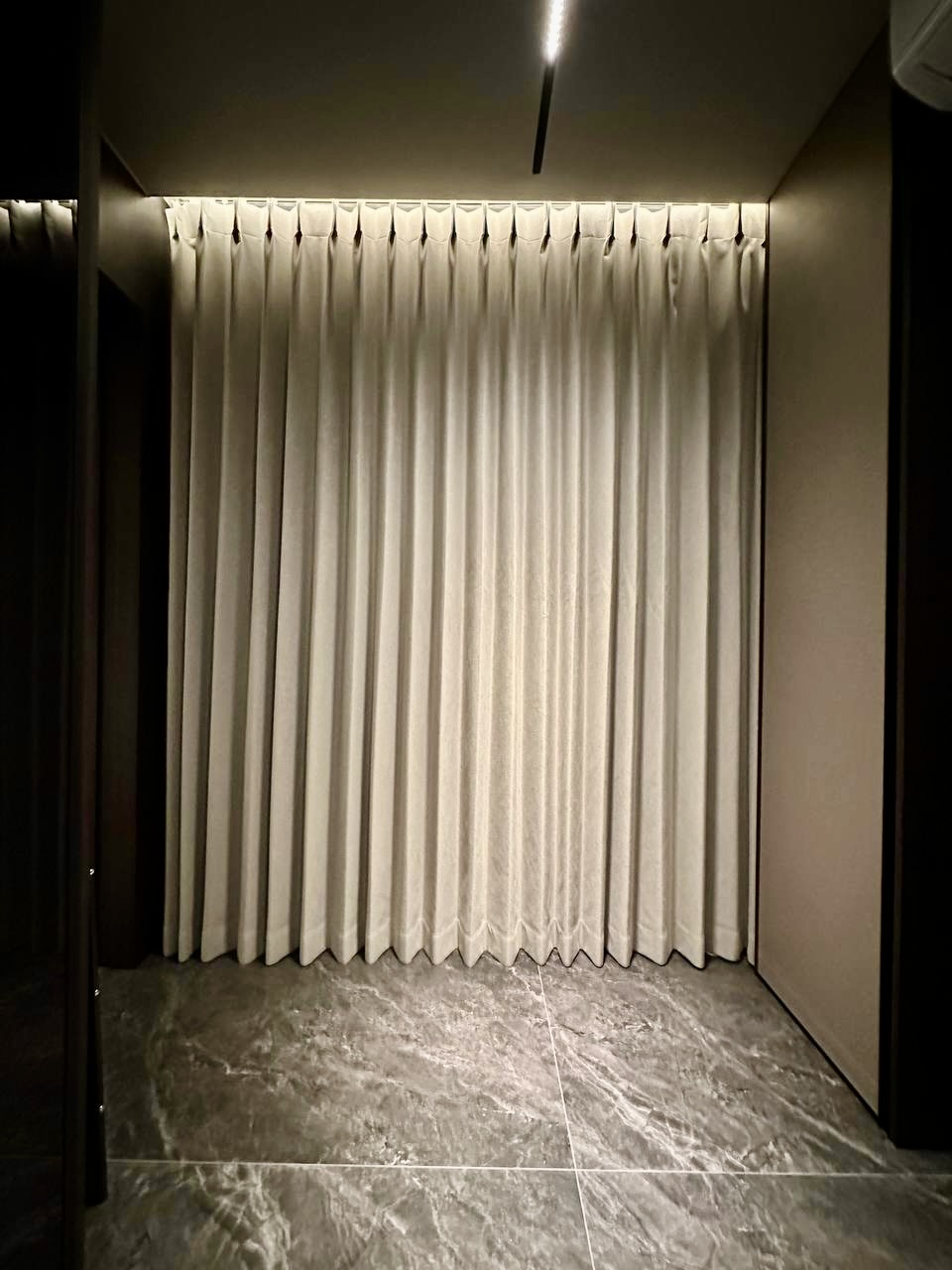
Curtains for small rooms need to provide privacy and light control without making the space feel crowded or visually heavy. This is particularly important in Singapore HDB flats and condos, where bedrooms, studies and other spaces may have limited floor area. The right curtain length, colour, fabric and installation can influence how spacious a room feels. Instead of simply choosing a curtain that fits the window, consider how the entire window treatment works with the proportions of the room. Here are several practical ways to choose curtains for compact spaces.
Why Curtains for Small Rooms Need Careful Planning
In a large room, a heavy curtain or bulky installation may not dominate the space. Small rooms are different. Curtains occupy a large vertical area, so their colour, texture and position can strongly influence the overall appearance of the room. The furniture may also sit closer to the window, leaving less space for curtain fabric to stack when open. Good planning helps you maintain privacy and light control without overwhelming the interior.
Use Floor-to-Ceiling Curtains to Create Height
It may seem logical to use shorter curtains in a small room, but full-height curtains can often create a cleaner appearance. Installing the curtain closer to ceiling level creates a strong vertical line from the top of the room to the floor. This can draw attention upward rather than emphasising the limited width of the room. Short curtains that stop near the bottom of the window can visually divide the wall into several sections. For many bedrooms and living spaces, a continuous floor-to-ceiling treatment creates a more unified look. You can browse our custom curtain collection to compare different fabric and curtain options.
Choose Colours That Work With the Room
Light neutral curtains are popular in compact interiors because they can blend naturally with surrounding walls. Warm white, cream, beige and other soft neutral tones can create a calm appearance without making the window treatment the dominant feature. However, this doesn’t mean every small room needs white curtains. A darker or stronger colour can work when it complements the rest of the interior. The important point is visual balance. If the room already contains several strong colours, patterns or textures, a simpler curtain may prevent the space from feeling too busy.
Sheer Curtains Can Keep Small Rooms Bright
Natural light can help a compact room feel more open during the day. For this reason, sheer curtains can work particularly well in small living rooms, bedrooms and studies. They soften incoming daylight while maintaining a lighter visual appearance than heavy fabric. The amount of privacy depends on the particular sheer, so always examine the fabric against natural light before making your decision. For rooms that also need stronger night-time privacy, consider combining the sheer with a second curtain layer.
Avoid Using More Fabric Than You Need
Full curtains need enough fabric to form attractive folds, but excessive fabric can add unnecessary visual weight in a compact room. This is where professional measurement becomes useful. The correct amount depends on the curtain style, track and fabric. Rather than simply ordering a very wide curtain because you want a fuller appearance, consider how the finished curtain will look both open and closed. Too much fabric also creates a larger stack at the side of the window.
Plan Curtain Stacking Space
Curtains for small rooms need somewhere to sit when you open them. In a compact bedroom, you may already have a wardrobe, bed, desk or bedside table close to the window. If the curtain stack occupies too much space, it can cover part of the glass even when fully open. This reduces natural light and can make the window appear smaller. Before installation, check the available space on both sides of the window and consider nearby furniture.
Keep Curtains Away From Built-In Furniture
Carpentry can create challenges around windows in small HDB and condo rooms. A full-height wardrobe beside the window may leave very little room for curtain fabric. A study desk or built-in shelf can also interfere with the way curtains hang. If you’re renovating, decide on your approximate window treatment before finalising carpentry around the window. You don’t necessarily need to choose the fabric early. You simply need to reserve enough space for the curtain and track.
Curtains for Small Bedrooms
Bedrooms need a balance between space, privacy and light control. A lighter curtain can keep the room visually soft, while a heavier layer can provide greater coverage when needed. If you prefer a darker sleeping environment, consider a layered arrangement with a sheer curtain for daytime and a dim-out or blackout layer for sleeping. This lets you enjoy natural light during the day without sacrificing stronger light control at night. Try to keep the area around the curtains free from unnecessary furniture so the fabric can move easily.
Consider Blinds When Side Space Is Limited
Curtains aren’t always the best solution for every small window. If a window sits directly beside a wardrobe or built-in desk, there may not be enough space for curtains to stack comfortably. A blind can provide a more compact alternative because it doesn’t require the same amount of side space. This can make blinds useful for studies, kitchens and smaller bedrooms. Explore our indoor blinds collection if your room has limited space around the window.
Keep Patterns and Textures Balanced
Patterns can add personality to a room, but consider their scale carefully. A large, high-contrast pattern across an entire wall of curtain fabric can become a strong visual feature. That may be exactly what you want. However, if your goal is to make the room feel calm and uncluttered, subtle textures or simpler fabrics may work better. Look at your bedding, furniture, wall colour and flooring together before selecting the curtain. The curtain should feel connected to the overall room rather than chosen separately.
Don’t Block Natural Light Unnecessarily
A small room can feel noticeably different when its window receives plenty of daylight. Make sure your open curtains don’t cover more glass than necessary. Proper track length and enough stacking space can help move the fabric away from the main window area when open. For rooms that don’t require full curtains during the day, sheers can also provide a balance between privacy and brightness.
Think About the Curtain Track
The curtain track may seem like a minor detail, but its position affects how the finished curtain hangs. In compact rooms, every centimetre around the window can matter. Consider the ceiling, air-conditioning units, wardrobes and other fixtures before deciding where the track should go. If your home is undergoing renovation, coordinate the track area before contractors complete nearby ceiling work and built-in furniture.
Measure After Renovation Work Is Ready
Don’t rely entirely on early renovation drawings when ordering customised curtains. Floor finishes, ceiling details and carpentry can affect the final available dimensions. Once the relevant renovation work is ready, your curtain installer can confirm the final measurements. Accurate measurements are particularly important in a small room because an incorrect length or track position can be much more noticeable.
Choosing Curtains for Small Rooms
The best curtains for small rooms don’t need to be complicated. Start with the practical requirements: privacy, natural light, sleeping conditions and available space around the window. Then consider curtain height, colour, fabric weight and stacking space. Floor-to-ceiling curtains can create a clean vertical appearance, while sheers can help maintain natural light. If there isn’t enough space for curtains to stack comfortably, blinds may provide a more compact solution. Most importantly, choose a window treatment that works with the entire room rather than looking at the window in isolation.
Explore the Curtainmise curtain range to compare curtain options for bedrooms, living spaces and other areas of your Singapore home.


