
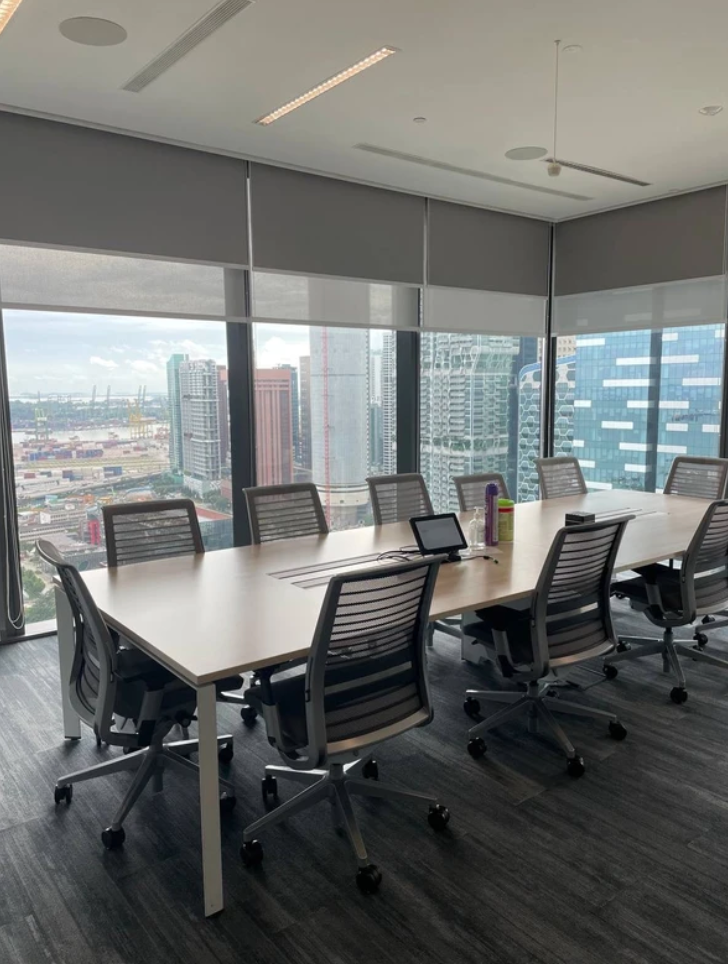
Commercial window treatments play an important role in managing light, privacy and comfort in Singapore workplaces. Offices, meeting rooms, retail shops and other professional spaces often have different requirements from residential interiors, especially when large windows receive strong daylight throughout the working day. The right solution should do more than simply cover a window. It should suit how people use the space, complement the interior and make it easy to control changing light conditions. From roller blinds in meeting rooms to curtains in customer-facing spaces, here are the main considerations when planning window treatments for a commercial environment.
Why Commercial Window Treatments Need Careful Planning
Every commercial space uses its windows differently. Employees working beside a window may need protection from strong glare on computer screens. A meeting room may require more privacy during discussions, while a retail shop may want to control sunlight without making the interior feel closed or dark. Instead of choosing the same product for every window, consider the function of each area first. Look at when direct sunlight enters, how much privacy people need and how frequently staff will adjust the window covering. These practical details can help determine whether curtains, roller blinds or another type of blind will work best.
Roller Blinds for Meeting Rooms
Roller blinds are a practical option for meeting rooms where adjustable privacy and light control are important. Their simple design works naturally with modern office interiors and does not require a large amount of space around the window. Staff can lower the blinds when sunlight becomes uncomfortable or when greater privacy is needed, then raise them again when they want more natural light. For meeting rooms used for presentations or video calls, controlling bright daylight can also make screens easier to view. The amount of coverage required depends on the window direction, surrounding buildings and how the room is used throughout the day.
You can explore our commercial and corporate solutions for window treatments suited to professional spaces.
Commercial Window Treatments for Work Areas
Work areas need a balance between daylight and visual comfort. Natural light can help a workplace feel brighter and more open, but excessive sunlight can create glare around desks and monitors. Good commercial window treatments allow employees to manage these changing conditions without keeping the windows permanently covered. Before deciding on a fabric or blind type, observe the area during normal working hours. A window that seems comfortable in the morning may receive much stronger sunlight later in the day. Understanding when the problem occurs can help you choose an appropriate level of light control.
Roller Blinds for Offices and Workplaces
Roller blinds are commonly suited to offices because of their compact installation and straightforward operation. Unlike full curtains, roller blinds do not require fabric to stack at the sides of the window. This can be useful where desks, cabinets or built-in furniture sit close to the glass. Different blind fabrics also provide different levels of light filtering and privacy. A lighter material may suit an area where the goal is to reduce brightness while maintaining daylight. Spaces requiring stronger coverage may need a more opaque option.
Browse our indoor blinds collection to compare different blind options for commercial interiors.
Window Treatments for Shops and Retail Spaces
Retail spaces have different priorities from offices. The window treatment becomes part of the customer-facing environment, so appearance can be just as important as practical light control. A shop receiving strong sunlight may need blinds to make the interior more comfortable while still maintaining an inviting atmosphere. The treatment should also work with displays, shelving and the overall design of the shop. Neutral roller blinds can suit clean, contemporary retail interiors, while curtains may be more appropriate for boutiques, consultation areas or showrooms where fabric contributes to the overall atmosphere. Consider how the window treatment looks from both inside and outside the premises.
Managing Glare Without Making the Workplace Dark
One common mistake is assuming that glare control requires completely blocking the window. That is not always necessary. The goal is to control excessive brightness while retaining useful daylight whenever possible. For moderate sunlight, a light-filtering blind may provide enough protection. Windows receiving stronger direct sunlight may require greater coverage. The position of desks and monitors also matters. Sometimes adjusting the workspace layout together with the window treatment can improve visual comfort without making the entire room darker.
Privacy in Meeting Rooms and Offices
Privacy requirements vary significantly across a workplace. An open office may require very little screening, while a meeting or consultation room may need much stronger coverage. Consider whether privacy is required all day or only during particular activities. Adjustable roller blinds are useful when staff need to change the level of coverage quickly. For customer-facing or design-led commercial spaces, curtains can provide another option when full coverage and a softer appearance are preferred.
Curtains in Commercial Interiors
Although blinds are common in workplaces, curtains can also work well in certain commercial environments. Showrooms, reception areas, consultation rooms and hospitality-style spaces may benefit from the softer appearance that fabric provides. Full-height curtains can also become an intentional part of the interior design rather than simply serving as a functional window covering. When selecting curtains for commercial use, consider how frequently staff will operate them, how much sunlight they receive and the cleaning requirements of the chosen fabric.
Explore our curtains collection to see different curtain options.
Choosing Colours for Commercial Window Treatments
Large windows mean blinds and curtains can occupy a significant visual area. Their colour should therefore work with the overall commercial interior. Neutral shades are versatile and can complement a wide range of flooring, furniture and wall finishes. However, neutral does not necessarily mean white. Warm grey, beige and other understated tones may integrate more naturally with certain interiors. Retail and customer-facing spaces can also use window treatments as part of their design concept. Whenever possible, view fabric samples near the actual window. Natural and artificial lighting can make colours look different from how they appear in a showroom.
Commercial Blinds and Easy Maintenance
Maintenance is another important consideration for workplaces. Commercial spaces may experience frequent daily use, and dust can build up around blinds, tracks and other moving components. Choose materials that suit the maintenance routine of the business. For roller blinds, regular light dusting or appropriate surface cleaning can help prevent dirt from accumulating. Always follow the manufacturer’s instructions because cleaning methods can differ between blind fabrics. For curtains, the recommended cleaning method will depend on the material and construction. Easy maintenance can be particularly valuable for larger premises with many windows.
Motorised Window Treatments for Larger Spaces
Motorised operation may be useful for large windows, difficult-to-reach installations or workplaces with several blinds or curtains. Instead of adjusting multiple window treatments manually, motorisation can make everyday operation more convenient. It may also suit larger meeting rooms, showrooms and other spaces where staff regularly change the amount of window coverage. If motorisation forms part of a renovation project, discuss the system before completing nearby electrical and ceiling work so the relevant requirements can be considered early.
Plan Around Desks, Displays and Built-In Furniture
Window treatments should be considered alongside the rest of the commercial interior. Desks, shelving, display cabinets and built-in furniture can affect how much installation space is available. Roller blinds are particularly useful where furniture sits close to the window because they require little side stacking space. Curtains need more consideration. When open, the fabric needs somewhere to stack without interfering with furniture, walkways or frequently used areas. Planning the window treatments before finalising built-in furniture can help prevent these conflicts.
Measure Commercial Windows Individually
Commercial premises often contain several windows that appear identical. However, small differences in dimensions can occur, particularly after renovation work, ceiling changes or the installation of partitions. Do not assume that one measurement automatically applies to every window. Individual measurements are especially important when several blinds sit beside one another and need to align neatly. Accurate sizing can also improve coverage and create a more consistent finished appearance across the workspace.
Choosing Commercial Window Treatments in Singapore
The best commercial window treatments depend on how each part of the workplace functions. Meeting rooms may benefit from roller blinds that provide adjustable privacy and light control. Work areas may require glare management around desks and monitors, while shops need to balance practical sunlight control with their customer-facing interior. Start with the needs of each area before deciding on a particular product. Then consider the window size, sunlight direction, privacy, furniture placement, maintenance and how frequently staff will operate the blinds or curtains.
For offices, meeting rooms, shops and other professional environments, explore our Corporate solutions and Blinds collection to find suitable window treatment options.


