
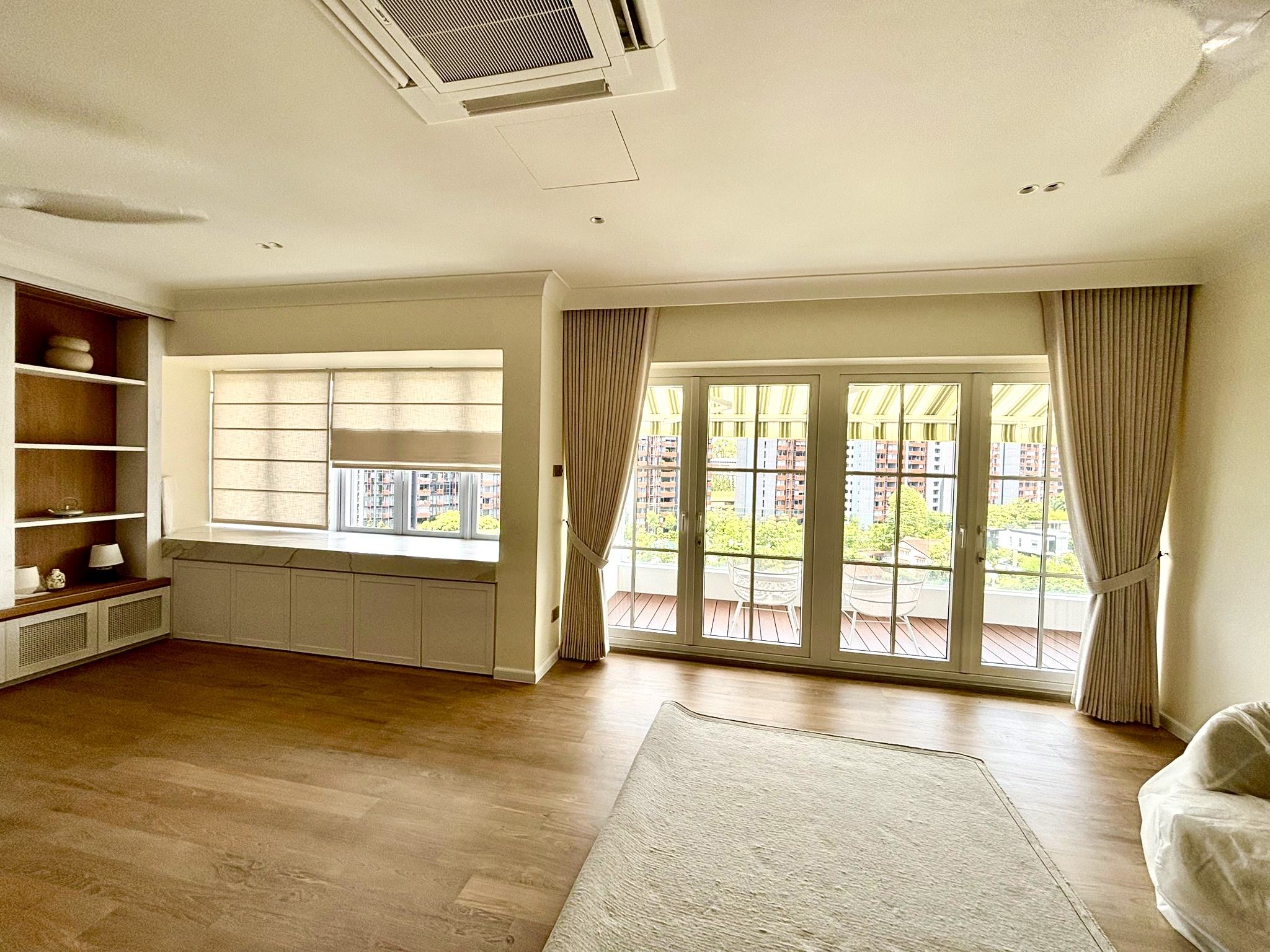
UV protection curtains can help manage the amount of direct sunlight reaching furniture, flooring and other interior surfaces. This can be useful in Singapore homes with large windows or rooms that receive strong sunlight for several hours each day. Natural light makes a home feel bright and welcoming, so blocking it completely is not always desirable. A better approach is to understand where direct sunlight enters your home and choose window treatments that give you greater control when you need it. Curtains, sheers and blinds can all play different roles in managing sunlight while maintaining the look and comfort of your interior.
Why Direct Sunlight Matters Inside Your Home
Furniture and interior materials can change gradually after repeated exposure to sunlight. You may notice colour changes on a sofa near a sunny window, differences in timber tones or fading on rugs and decorative fabrics. The amount of change depends on many factors, including the material, window direction, type of glass and duration of exposure. Instead of treating every window the same way, start by identifying the areas of your home that receive the most direct sunlight.
Which Areas Receive the Most Sunlight?
Observe your rooms at different times of the day. Morning sunlight may affect one side of the home, while another room may receive stronger light later in the afternoon.
Pay attention to direct sunlight falling on:
- Sofas and upholstered furniture
- Timber furniture
- Flooring
- Rugs and carpets
- Artwork and photographs
- Decorative fabrics
- Display shelves
This simple check helps you identify which windows may benefit most from additional light control.
How UV Protection Curtains Can Help
UV protection curtains add a physical layer between the window and your interior. Different curtain fabrics provide different levels of coverage, so homeowners should consider the fabric construction and intended use rather than choosing based on colour alone. For rooms with strong direct sunlight, heavier curtains can provide greater coverage when you need it. However, you don’t necessarily need to keep them closed all day. You can close the curtains during periods of direct exposure and open them again when the sun moves away from the window. This gives you better control without sacrificing natural light throughout the entire day.
Use Sheer Curtains to Diffuse Daylight
Sheer curtains can provide a useful first layer for bright living spaces. Instead of leaving the window completely uncovered, a sheer fabric can soften incoming daylight while keeping the room visually bright. This makes sheers particularly suitable for living rooms where homeowners want natural light but prefer to reduce harsh direct brightness. Different sheer fabrics vary in density and transparency. Hold fabric samples against natural light before deciding which one suits your room. You can explore our curtain collection to compare different sheer and curtain options.
Heavier Curtains for Stronger Light Control
Some rooms need stronger coverage. A room with large windows and prolonged direct sunlight may benefit from a heavier curtain that you can close during the brightest part of the day. Dim-out and blackout fabrics can provide stronger light control than lightweight sheers. This can also be useful in bedrooms where homeowners want to manage both sunlight and sleeping conditions. A layered setup gives you even more flexibility: use the sheer when you want daylight and close the heavier curtain when you want stronger coverage.
Can Blinds Help Manage Sunlight?
Yes. Blinds can provide another way to manage incoming sunlight. Depending on the style and fabric, blinds can help reduce glare or provide stronger coverage while maintaining a compact appearance around the window. They can work particularly well in home offices, studies and rooms where homeowners prefer a cleaner window treatment. Some blind fabrics also allow varying degrees of outward visibility while reducing the intensity of incoming light. You can browse our indoor blinds collection to compare available options.
UV Protection Curtains for Large Windows
Large windows deserve extra attention because they expose a greater area of the room to sunlight. This is particularly relevant for condo living rooms with full-height glass or large sliding balcony doors. Full-height curtains can provide adjustable coverage across the entire opening. During periods of direct sunlight, you can close the appropriate layer. At other times, you can open the curtains to enjoy the view and natural light. When choosing UV protection curtains for large windows, also consider where the fabric will stack when open. Large curtain panels need enough side space to avoid covering too much of the glass.
Consider Your Furniture Position
Window treatments are only one part of managing sunlight. Furniture placement can also make a difference. If a sofa, rug or timber cabinet receives direct sunlight for several hours every day, consider whether you can reposition it. Even a small change in furniture placement may reduce the amount of direct exposure it receives. This is particularly useful when planning a new home or renovation because you can observe the sunlight before finalising the furniture layout.
Don’t Choose Curtains Based on Colour Alone
A common assumption is that darker curtains automatically provide better protection from sunlight. The reality is more complicated. Fabric density, construction, lining and other material characteristics can affect how much light passes through a curtain. Two fabrics with a similar colour may perform differently when placed against a bright window. If sunlight management is an important reason for purchasing curtains, discuss the actual fabric characteristics with your curtain supplier.
Layer Curtains for Greater Flexibility
Layering allows you to adjust your window treatment according to changing conditions. For example, you can use a sheer curtain during normal daylight hours and close a heavier curtain when direct sunlight becomes stronger. This approach gives you several levels of light control instead of choosing between a completely uncovered window and a fully closed heavy curtain. It can work particularly well in living rooms where both natural light and interior protection matter.
What About Balcony Sunlight?
In some condos, much of the sunlight enters through large balcony openings. Indoor curtains and blinds can help manage this light from inside the home. For homeowners who also want to explore an outdoor shading system for an exposed balcony, our Zipblind range provides another option to consider. The appropriate solution depends on the balcony, property requirements and the type of exposure you want to manage.
Protecting Furniture Without Making Your Home Dark
Managing sunlight doesn’t mean turning a bright home into a dark one. The goal is to gain more control over when and how much direct sunlight enters the room. Sheer curtains can soften daylight during normal use. Heavier curtains can provide stronger coverage during periods of direct sunlight. Blinds can offer another level of adjustment for selected windows. Combining these approaches allows you to respond to changing light conditions throughout the day.
Choosing UV Protection Curtains for Your Home
The right UV protection curtains should suit both your windows and the way you use your home. Start by observing where direct sunlight enters and which furniture or interior surfaces receive the most exposure. Then consider whether you need a sheer, heavier curtain, blind or layered combination. For rooms with large windows, also consider curtain stacking space and how frequently you want to open and close the window treatment. Most importantly, don’t rely only on fabric colour or appearance when sunlight control matters. Compare suitable materials and ask about the characteristics of the specific fabric you are considering.
Explore our Curtainmise curtains range to compare window treatment options for different rooms and lighting conditions.


