
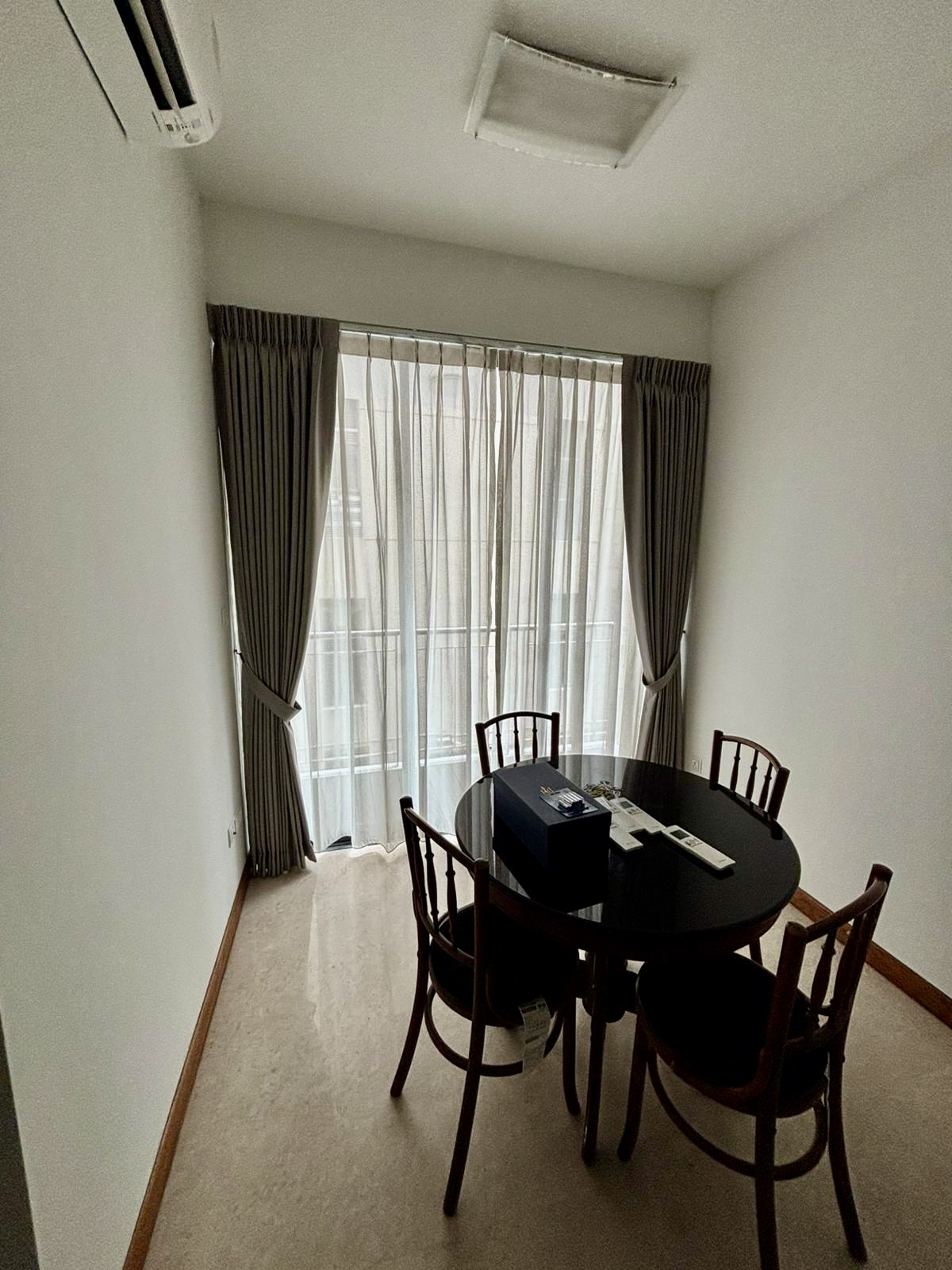
Dining room curtains can change the atmosphere of a dining space by softening daylight, improving privacy and adding warmth to the interior. In Singapore homes, dining areas are often positioned close to large windows or balcony-facing glass, making the choice of window treatment especially important. Unlike bedrooms, dining areas rarely need complete darkness. The priority is usually to maintain comfortable natural light while controlling glare and creating enough privacy when needed. The right curtains should also work naturally with your dining table, lighting, flooring and surrounding furniture. Here are the main considerations when planning curtains for a dining space.
Why Dining Room Curtains Matter
The dining area is more than a place for meals. It may also be where family members gather, guests are entertained or everyday activities take place. Windows can strongly influence how comfortable this space feels. Too much direct sunlight can make daytime meals uncomfortable, while completely covering the windows may make the dining area unnecessarily dark. Well-planned dining room curtains give you greater control over these conditions while also becoming part of the interior design.
Sheer Curtains for Dining Areas
Sheer curtains are particularly suitable for dining spaces because they soften daylight without completely blocking it. During the day, a sheer fabric can reduce the harsh appearance of direct light while keeping the room bright and welcoming. This can work especially well when the dining table sits close to a window. Sheers also introduce texture without visually overwhelming the dining furniture. However, not all sheer fabrics provide the same level of screening. Some are very transparent, while others use a denser weave. View the fabric against natural light before making your final decision.
Explore our curtains collection to compare different curtain styles and fabric options.
Dining Room Curtains for Privacy
Privacy requirements depend heavily on where your dining area is located. A dining space facing another residential block may need more screening than one facing an open view. During daylight hours, a suitable sheer can provide some visual screening while maintaining natural light. At night, the situation changes. Once indoor lights are switched on, lightweight fabrics may provide less privacy. If night-time privacy is important, consider a layered arrangement with a second, heavier curtain. This allows you to use the sheer during the day and close the second layer when stronger coverage is needed.
Choosing the Right Curtain Colour
Curtains occupy a large vertical area, so their colour can noticeably influence the appearance of your dining room. Instead of choosing the curtain colour separately, look at the dining space as a whole. Consider your dining table, chairs, flooring, walls, lighting and nearby cabinetry. Warm neutrals can work naturally with timber dining furniture, while lighter fabrics can help maintain an airy appearance. You don’t necessarily need to match the curtains exactly to your furniture. A complementary tone often creates a more natural result than trying to make every element the same colour.
Match Curtains With Your Dining Furniture
The size and visual weight of your dining furniture should also influence your curtain choice. A large solid dining table already creates a strong visual feature. Adding very heavy or highly patterned curtains nearby can make the area feel busy. In this situation, a simpler curtain can provide balance. With lighter or more minimal furniture, textured fabric can add warmth without requiring a strong pattern. Also consider how the curtain looks behind the dining table when viewed from other areas of the home. The fabric becomes part of the background of the dining setting, not simply a window covering.
Full-Height Dining Room Curtains
Full-height curtains can create a clean, continuous line from the upper part of the wall towards the floor. This can be particularly effective in dining areas with larger windows. The longer vertical line can also make the window treatment feel more integrated with the room rather than appearing as a separate feature attached only to the window. However, the installation should suit the actual ceiling and window conditions. Consider nearby lighting, air-conditioning components and built-in carpentry before deciding on the final track position.
Leave Enough Space Around the Dining Table
Furniture placement is particularly important when choosing dining room curtains. Dining chairs move backwards when people sit down or stand up. If the table sits very close to the window, chairs may repeatedly touch the curtain fabric. This can cause unnecessary wear and may also make the curtain difficult to operate. Check the clearance with the chairs pulled out rather than measuring only from the dining table. The curtain should have enough room to hang and move naturally without interfering with everyday dining activities.
Think About Where the Curtains Will Stack
When curtains are open, the fabric needs somewhere to go. This is called the curtain stack. For wider dining-room windows, the stack can occupy a noticeable amount of space at one or both sides. Before installation, check whether the curtain stack will interfere with switches, cabinets, artwork or nearby furniture. You should also consider whether you prefer the curtains to open from the centre or move towards one side. The best configuration depends on the window position and surrounding furniture.
Dining Room Curtains and Afternoon Sun
If your dining area receives strong afternoon sunlight, fabric selection becomes more important. A very lightweight sheer may soften the appearance of the light but may not provide enough control when direct sunlight becomes intense. A layered setup gives you more flexibility. You can use the lighter layer under normal conditions and close the heavier layer when the sun becomes uncomfortable. For dining areas where curtains are not practical, blinds can provide another way to control changing light conditions.
You can explore our indoor blinds range for alternative window treatments.
Choose Fabrics With Practical Maintenance in Mind
Dining areas are active spaces. Food, drinks and frequent movement mean practicality should be part of the fabric decision, especially when curtains sit close to the dining table. Consider fabrics that suit your preferred cleaning and maintenance routine. Always check the manufacturer’s care instructions before washing or treating the material. Very delicate fabrics may require more careful maintenance, while certain synthetic or blended materials can be easier to manage for everyday residential use. The right choice depends on both the desired appearance and how the dining area is used.
Should You Use Patterned Dining Room Curtains?
Patterned curtains can work in a dining area, but consider how many other visual elements already exist in the space. Dining chairs, feature lights, artwork, flooring and decorative pieces can all compete for attention. If several of these elements are already prominent, simpler curtains can create a calmer background. If the dining room has a minimal design, subtle pattern or texture may add character. Remember that a curtain sample looks much smaller than the finished installation. A pattern that appears subtle on a small sample can become much more noticeable across a large window.
Curtains or Blinds for a Dining Area?
Both can work. Curtains create a softer appearance and can become an important part of the dining-room design. Blinds require less side stacking space and may suit dining areas where furniture sits very close to the window. You can also combine them. For example, a blind can provide practical light control while curtains add softness around the window. The decision should depend on available space, privacy requirements, sunlight and the overall interior rather than following one fixed rule.
Dining Room Curtains in HDB and Condo Homes
HDB flats and condominiums can have very different dining-room layouts. Some dining areas sit beside the living-room windows, while others occupy a separate corner of the home. In compact layouts, avoid choosing a curtain based only on the window itself. Look at how much space remains after positioning the dining table and chairs. For larger condo dining areas, wider windows may allow curtains to become a stronger visual feature. In both cases, the goal is the same: the window treatment should support the dining area without making everyday movement difficult.
Choosing Dining Room Curtains
The best dining room curtains combine practical light control with an appearance that complements the dining space. Start by considering how much sunlight reaches the area and whether daytime or night-time privacy is important. Then look at your furniture, curtain colour, fabric, installation height and the space required for the curtains to open and close. Sheers can keep dining areas bright and comfortable during the day, while layered curtains can provide stronger coverage when required. Most importantly, plan the curtains together with the dining table and surrounding furniture rather than treating the window as a separate part of the room.
Explore our Curtainmise curtains range to compare curtain options for dining and living spaces in Singapore homes.


