
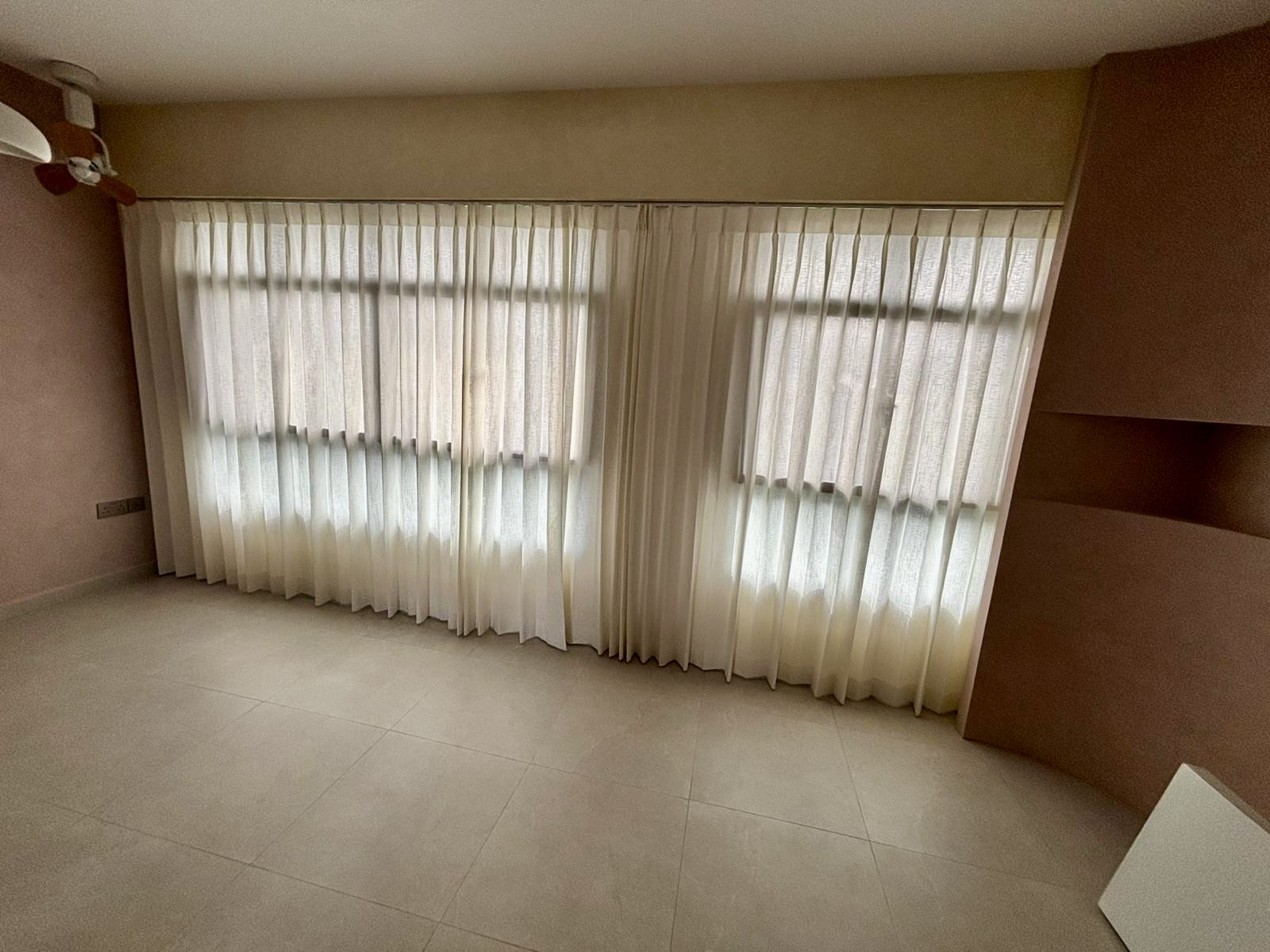
Floor to ceiling curtains are a popular option for Singapore homes with large windows, full-height glass or sliding balcony doors. They can create a clean, elegant appearance while giving homeowners greater control over natural light and privacy. However, large windows need careful planning. Fabric weight, curtain stacking, track position, furniture placement and the way you use the room can all influence the final result. If your condo or home has large windows, here are the main things to consider before choosing your curtains.
Why Choose Floor to Ceiling Curtains?
Large windows already create a strong visual feature in a room. Installing curtains from ceiling level helps maintain those vertical lines instead of visually dividing the wall around the top of the window. Long curtains can also create a more complete appearance across large areas of glass. They work particularly well in living rooms and bedrooms where the windows extend close to the floor. The goal is not simply to cover the glass. Your curtains should work with the proportions of the room.
Start With How You Use the Room
Before choosing fabric, think about what you need from the window treatment. A living room may need comfortable daytime light and privacy without losing its bright atmosphere. A bedroom usually requires stronger privacy and light control. A large sliding door leading to a balcony needs another consideration: easy access. Understanding how you use the room will help you decide whether you need sheers, heavier curtains or a combination of both.
Sheer Floor to Ceiling Curtains for Living Rooms
Sheers work particularly well across large windows because they soften the appearance of the glass without making the room feel heavily covered. During the day, sheer curtains can diffuse strong natural light while maintaining a bright interior. The fabric also adds texture and movement to a room that might otherwise contain large areas of hard glass. When comparing sheer fabrics, don’t choose by colour alone. Look at the density and transparency of the material under natural light.
You can explore our custom curtain collection for different sheer and curtain options.
Bedrooms Need More Light Control
Large bedroom windows can bring substantial amounts of light into the room. For homeowners who prefer a darker sleeping environment, a heavier curtain can provide stronger light control than a sheer alone. You can also combine two layers: a sheer for daytime use and a dim-out or blackout curtain for the evening. This gives you more flexibility without requiring the heavier curtain to remain closed throughout the day. Remember that fabric is only part of the equation. Light can also enter around the top, sides and bottom of an installation, so track positioning matters too.
Plan Enough Space for Floor to Ceiling Curtains
One common mistake with floor-to-ceiling curtains is focusing only on how they look when closed. Large curtains need somewhere to sit when you open them. The wider the window, the more fabric you may have at the side. If you don’t leave enough stacking space, the open curtains can continue to cover part of the glass. This reduces the view and the amount of natural light entering the room. When planning a renovation, consider the curtain stack before positioning full-height cabinets, feature walls or other built-in furniture beside the window.
Consider How the Sliding Door Opens
Many Singapore condos combine floor-to-ceiling windows with balcony doors. Think about how you normally enter the balcony. If you frequently use one side of the sliding door, your curtain configuration should make that access convenient. Furniture placement matters here too. Avoid creating a situation where you need to move a curtain around a sofa or table every time you want to open the balcony door. The curtain should support how you use the room rather than becoming an obstacle.
Curtain Tracks Matter on Large Windows
A large curtain places different demands on its track compared with a small window curtain. The track needs to support the selected fabric and allow the curtains to move smoothly across the full width. If you’re renovating, discuss curtain tracks before completing nearby ceiling work or carpentry. This gives your installer more flexibility when planning the final position. For homes that are still undergoing renovation, early track planning can also help create a cleaner finished appearance.
Consider Motorised Operation for Wide Curtains
Opening a small bedroom curtain by hand is easy. Repeatedly moving a large amount of fabric across a wide living-room window can feel different. For this reason, some homeowners consider motorised operation for large floor-to-ceiling curtains. Motorisation can be particularly convenient for curtains that you open every morning and close every evening. If you’re interested in this option, discuss it during renovation so your contractor and electrician can account for any electrical requirements of the selected system.
Don’t Let Furniture Interfere With the Fabric
Large curtains need enough space to hang naturally. A sofa pushed tightly against the curtain can affect the folds and make the fabric sit unevenly. Side tables, shelves and decorative objects can cause similar problems. Try to leave a practical gap between the curtains and nearby furniture. This also makes it easier to open and close the curtains without the fabric catching on objects.
What About Blinds for Large Windows?
Some homeowners prefer a cleaner or more minimal window treatment. Depending on the window dimensions and the particular system, blinds may provide another option for selected large windows. They can also work well in rooms where there isn’t enough side space for a large curtain stack. You can browse our indoor blinds range to compare different styles. For large balcony openings where outdoor shading is also a consideration, explore our Zipblind options.
Choose Fabric After Seeing a Larger Sample
A small fabric swatch does not always show how a material will look across a large window. This matters even more with full-height installations because the curtains can cover a significant portion of the wall. Where possible, examine the fabric in natural light and consider how its colour and texture work with your flooring, walls and furniture. For sheers, check the transparency. For heavier curtains, consider how the fabric falls and how much visual weight it adds to the room.
Measure After Important Renovation Work
Accurate measurements matter for any custom curtain, but full-height installations leave less room for error. Changes to flooring or ceiling finishes can affect the final height. If your home is undergoing renovation, let your curtain installer determine when the site is ready for final measurements. Avoid ordering based only on measurements taken before major renovation work finishes.
Choosing Floor-to-Ceiling Curtains for Your Home
The best floor-to-ceiling curtains combine appearance with practical everyday use. Consider the purpose of the room, amount of natural light, privacy requirements, curtain stacking space, track position and nearby furniture before selecting the final configuration. For living rooms, sheers can help maintain a bright and open appearance. Bedrooms may benefit from an additional heavier layer for stronger light control. Most importantly, plan the complete window area rather than choosing fabric in isolation.
You can explore the Curtainmise curtain collection to compare fabric and curtain options for large windows in Singapore homes.


