
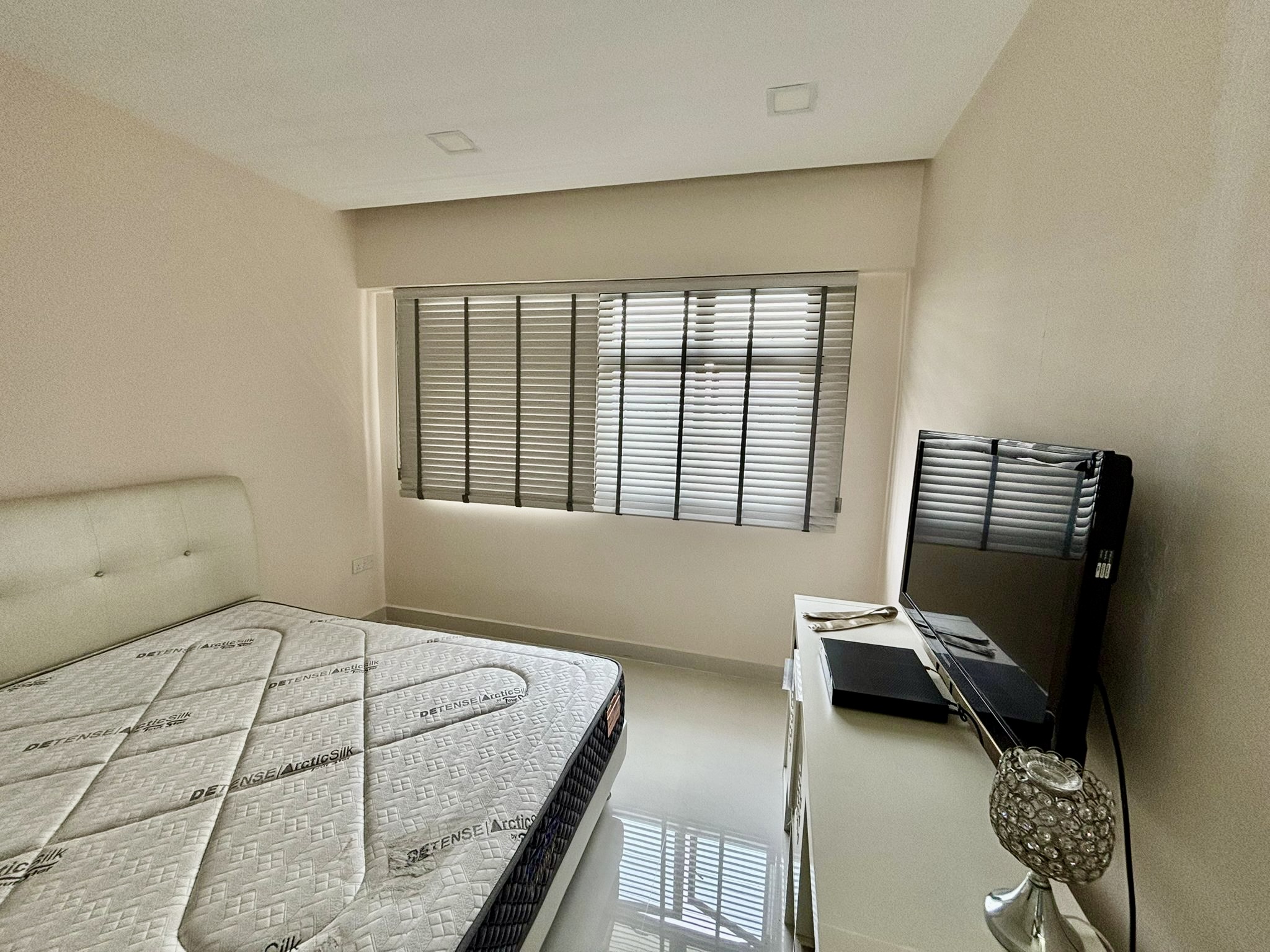
Curtain track planning is worth considering early when renovating a home in Singapore. Although homeowners usually install curtains near the end of a renovation, the ceiling, carpentry and space around your windows can determine the track position much earlier. Planning ahead does not mean you need to select your final curtain fabric before renovation begins. Instead, early planning helps you reserve enough space for the curtain configuration you want and prevents ceiling features, cabinets or other fixtures from interfering with the installation. Here are the main things to consider when planning curtain tracks for an HDB flat, condominium or landed home.
Why Curtain Track Planning Should Start Early
Curtains may look like one of the final decorative elements of a room, but their installation connects with several parts of your renovation. False ceilings, built-in carpentry, air-conditioning units and electrical points can all affect the available space around a window. Early curtain track planning gives your renovation contractor and curtain installer a clearer idea of how the finished window area should work. You do not necessarily need final measurements at this stage. The goal is simply to avoid placing other renovation features in the space your curtains will eventually need.
Check the Ceiling Above Your Windows
Look at what your renovation design includes directly above each window. A standard ceiling may provide a straightforward area for mounting curtain tracks. A false ceiling, curtain pelmet or other ceiling feature may require more coordination. If you want your curtains to appear as though they fall directly from the ceiling, discuss this with your contractor and curtain installer before completing the ceiling work. Your ceiling construction, window position and curtain configuration will determine the most suitable track position.
Leave Enough Space for Curtain Layers
Think about whether you want one or two curtain layers. A single curtain layer normally uses one track, while a combination such as sheer curtains with heavier night curtains needs additional space. The tracks need enough separation so both fabric layers can move smoothly without constantly rubbing against each other. If you are unsure which configuration you prefer, browse our curtains collection before finalising the area around your windows. You do not need to choose the exact fabric yet. Simply knowing whether you prefer a single or layered installation can help during renovation planning.
Plan Enough Curtain Stacking Space
When you open your curtains, the fabric needs somewhere to stack. This matters especially for wide living-room windows and sliding balcony doors. Larger curtains can create a substantial fabric stack at the side of the window. Without enough space, the open curtain may continue to cover part of the glass. This can reduce your outside view, limit natural light and potentially interfere with access to a sliding door. Good curtain track planning should therefore consider how the curtains will look and function in both their open and closed positions.
Coordinate Curtain Tracks with Carpentry
Built-in furniture is another important consideration when planning your curtain layout. For example, a full-height cabinet immediately beside a window can reduce the space available for the curtain to stack. Window seats, television cabinets, shelving and feature walls can create similar problems. Ask your renovation designer or contractor to consider the curtain area before confirming carpentry dimensions around your windows. A small adjustment during the planning stage can give your finished curtains much more room to hang naturally.
Check Nearby Air-Conditioning Units
Renovation layouts often place air-conditioning units relatively close to windows. Make sure your planned curtains do not interfere with the air-conditioning unit, airflow or access for future servicing. Air-conditioning piping boxes can also reduce the available space around the window. If your renovation includes an air-conditioning unit or piping enclosure close to a window, show its planned position to your curtain installer before confirming the curtain track location.
Plan Early for Motorised Curtains
If you are considering motorised curtains, discuss them during the renovation rather than waiting until everything is complete. Some motorised curtain systems require electrical provisions, so discuss these requirements with your electrician early. Early planning can also help you achieve a cleaner finished appearance and reduce the need for unnecessary visible wiring later. Motorised operation can be particularly convenient for large living-room windows or curtains that you open and close frequently. Ask your curtain supplier, renovation contractor and electrician to confirm the requirements of your chosen system before completing the relevant renovation work.
Consider Whether Some Windows Need Blinds Instead
Not every window necessarily needs curtains. For smaller rooms, studies or windows with limited surrounding space, blinds may provide a more compact solution. For example, you might choose full-height curtains for the living room and bedrooms while using roller or other blinds in a study or home office. You can compare different options through our indoor blinds collection. Making this decision during renovation also prevents you from reserving curtain space around windows where you plan to use blinds instead.
Think About Furniture Placement
Furniture can affect how curtains hang even when it is not attached to the wall. A sofa positioned too close to a full-height curtain may push against the fabric. Side tables, shelves and other furniture can also interfere with how curtains open and close. Look at your proposed furniture layout together with your window treatment plan. This is particularly useful for compact HDB and condo rooms where you need to make good use of the available space.
When Should You Take Final Curtain Measurements?
Planning measurements and final production measurements serve different purposes. During the early renovation stage, approximate dimensions can help you decide on the general curtain configuration. However, flooring, ceiling work and carpentry can still change the final dimensions of the room. For customised curtains, ask your installer to take the final measurements after the relevant renovation work is complete. This helps ensure the curtain length and track position match the actual finished space.
Curtain Track Planning Before Renovation Is Complete
Good curtain track planning comes down to coordination. Before completing your ceiling and carpentry, consider the number of curtain layers, stacking space, nearby air-conditioning units, furniture placement and whether you want motorised operation. You do not have to make every curtain decision at the beginning of your renovation. You simply need to make sure your renovation leaves enough space for the window treatments you want later.
When you are ready to choose the actual fabric and curtain configuration, explore our curtains range to compare options for different rooms.


