
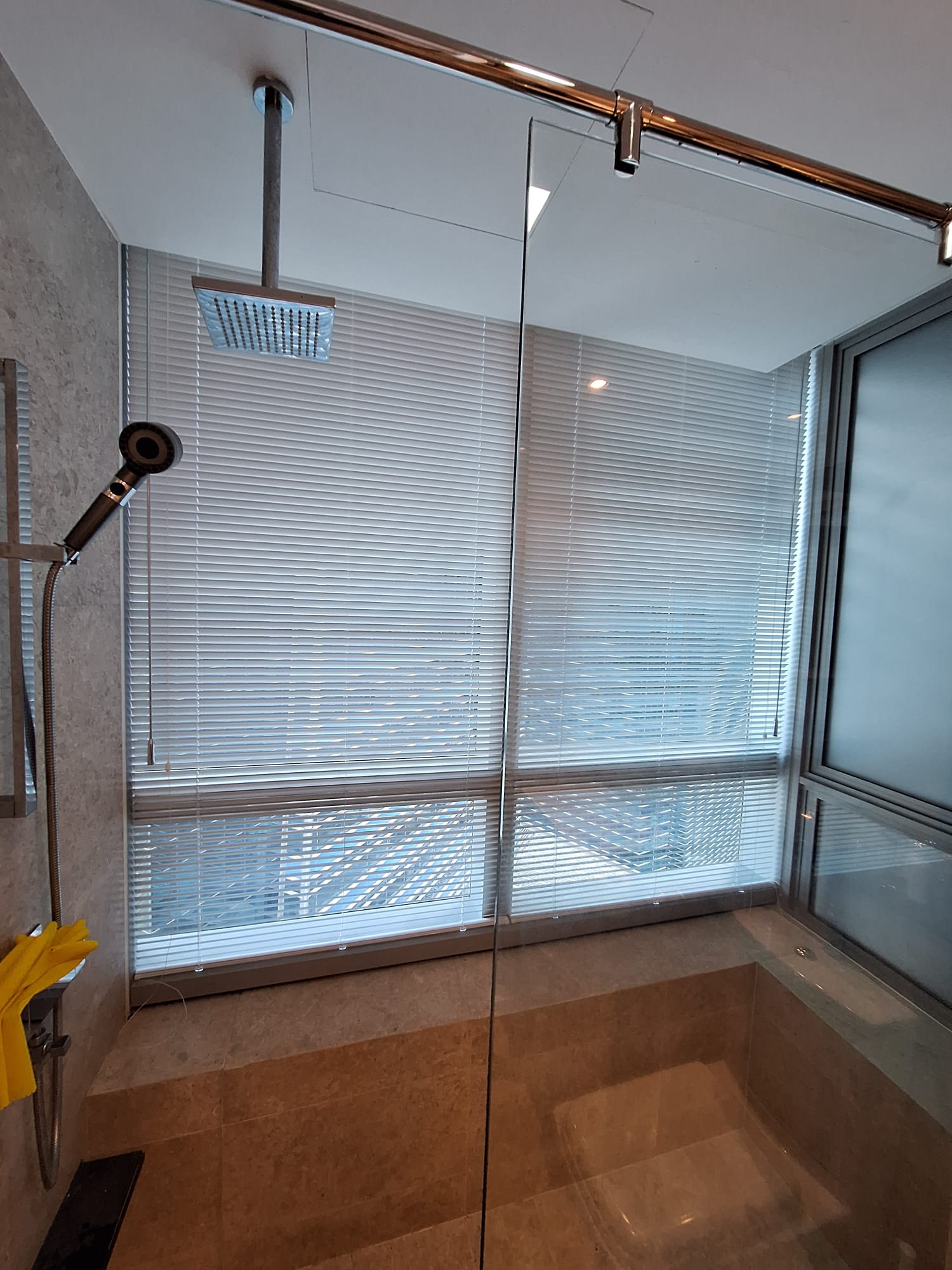
Bathroom blinds can provide privacy and light control without taking up much space around the window. This makes them a practical option for many Singapore bathrooms, where humidity, ventilation and limited space all need to be considered. Choosing a bathroom window treatment is different from selecting curtains or blinds for a living room. The blind may sit in an area exposed to moisture, frequent temperature changes and daily cleaning. Privacy is also especially important. The right blind should provide suitable coverage while remaining practical for the conditions of the bathroom. Here are the main points to consider before choosing blinds for a bathroom or toilet.
Why Bathroom Blinds Need Different Considerations
Bathrooms are naturally more humid than most other rooms. Hot showers produce moisture, surfaces may remain damp after use, and smaller bathrooms may take longer to dry if ventilation is limited. This means appearance should not be the only factor when choosing bathroom blinds. You should also consider the blind material, window position, ventilation, cleaning requirements and how close the blind will be to direct water. A product that works perfectly in a bedroom may not necessarily be suitable beside a shower or other wet area.
Bathroom Blinds for Privacy
Privacy is usually the first consideration for a bathroom window. Some HDB and condo bathrooms use frosted or textured glass, but homeowners may still prefer additional coverage. A blind gives you greater control over when the window is covered. You can lower it when using the bathroom and raise it when additional daylight or ventilation is preferred. If the bathroom faces another building or a common area, consider how much coverage the selected material provides under different lighting conditions. Remember that privacy can change at night when the bathroom lights are switched on.
Consider the Position of the Bathroom Window
Before choosing a blind, look carefully at where the window sits. A window positioned away from the shower generally gives you more flexibility because the blind is less likely to receive direct water. A window located inside or immediately beside a shower area requires more careful consideration. Repeated water exposure can affect materials and mechanisms that are not designed for wet conditions. The blind should also remain easy to reach without requiring you to lean across a wet or slippery area. Practical placement matters just as much as appearance.
Humidity and Bathroom Blinds
Singapore’s climate already has high humidity, and bathrooms add even more moisture to the environment. Good ventilation therefore matters. After showering, allow the bathroom to dry properly using the available window, ventilation fan or other ventilation system. Avoid leaving a damp blind rolled or folded up for long periods. If moisture remains trapped between layers or around moving components, drying may take longer. Regular ventilation helps both the bathroom and its window treatment remain easier to maintain.
Choosing Suitable Blind Materials
Material selection is especially important in bathrooms. Before purchasing, check whether the blind material and components are suitable for the intended environment. Some fabrics and materials handle occasional humidity better than others, while certain products may not be recommended for areas exposed to direct water. Don’t assume that every roller blind or fabric blind is automatically suitable for bathroom use. Ask about the specific material and its recommended installation conditions.
You can browse our indoor blinds collection to explore different blind options.
Roller Blinds for Bathroom Windows
Roller blinds can work well in suitable bathroom locations because of their compact design. When raised, the material rolls neatly above the window instead of occupying space at the sides. This can be useful in smaller bathrooms where walls may already contain mirrors, cabinets, towel rails or other fittings. When lowered, the blind provides straightforward window coverage. However, the suitability of a roller blind depends on its material and where the window is located. If the blind will regularly receive direct water, confirm that the selected product is intended for those conditions before installation.
Bathroom Blinds for Small HDB Toilets
Space is often limited in HDB bathrooms. A bulky window treatment can interfere with other fittings or make a compact area feel more crowded. A simple blind can keep the installation relatively contained around the window. Before ordering, check whether the blind will interfere with the window handle, ventilation opening, pipes or nearby bathroom accessories. Also consider how the actual window opens. A blind that prevents easy access to the window can become frustrating during everyday use.
Don’t Block Bathroom Ventilation
Privacy matters, but ventilation should not be forgotten. If the bathroom relies partly on an open window for airflow, the blind should allow you to access and operate that window conveniently. This is particularly important after showers, when moisture needs to escape. Consider how the blind behaves in both the raised and lowered positions. The most attractive installation will still be inconvenient if you need to move or adjust it awkwardly every time you open the window.
Bathroom Blinds and Natural Light
Bathroom windows can provide useful daylight, particularly in smaller spaces. Completely covering the window throughout the day may make the bathroom feel darker than necessary. If privacy conditions allow, raise the blind when the bathroom is not in use to bring in more daylight. Where stronger privacy is required throughout the day, discuss suitable material options that provide the level of coverage you need. The goal is to balance privacy and light rather than automatically blocking the window at all times.
Choosing the Right Colour
Bathroom window treatments often work best when they complement the tiles, cabinetry and other finishes already in the room. Lighter neutral shades can blend naturally with many bathroom interiors and may help maintain a clean appearance. Darker colours can create stronger contrast in bathrooms with lighter tiles. However, colour should come after practical suitability. First choose a material appropriate for the window position and bathroom conditions. Then select a colour from the suitable options.
Cleaning Bathroom Blinds
Bathrooms require regular cleaning, and the blind should be included in that routine. Dust can combine with moisture and become more noticeable around the blind surface and mechanism. Follow the manufacturer’s cleaning instructions for the specific material. For suitable surfaces, light regular cleaning may prevent dirt from becoming difficult to remove later. Avoid soaking a fabric blind unless the manufacturer specifically states that the material can handle it. Also allow the blind to dry fully after cleaning before rolling or closing it for an extended period.
Watch for Mould and Moisture Build-Up
Bathrooms can create conditions where mould develops if surfaces remain damp for long periods. Check the blind, window frame and surrounding areas periodically. Pay particular attention to corners and areas with limited airflow. If you notice persistent moisture, improving ventilation should be part of the solution rather than simply cleaning the blind repeatedly. Mould treatment methods depend on the material, so avoid applying strong household cleaning products without checking whether they are safe for the blind.
Blinds or Curtains for Bathroom Windows?
For many compact bathrooms, blinds are generally easier to accommodate than traditional fabric curtains. Curtains require space to hang and may sit close to wet floors or bathroom fixtures. A blind keeps the window treatment contained within a smaller area. However, the best solution still depends on the actual bathroom. Window size, water exposure, ventilation and privacy requirements should guide the decision rather than choosing a product purely because it looks good in another room.
Bathroom Blinds for Condo Bathrooms
Condo bathrooms may include larger windows or different layouts from typical HDB bathrooms. Some master bathrooms also have windows positioned near bathtubs or vanity areas rather than directly beside the shower. These layouts can provide more flexibility when choosing a window treatment. Still, consider the same fundamentals: privacy, humidity, direct water exposure, operation and maintenance. For larger windows, also check whether one wide blind or separate blinds would provide more convenient control.
Measure Around Bathroom Fixtures
Bathroom measurements require more than checking the width and height of the window. Look at everything surrounding it. Mirrors, cabinets, shower screens, taps, pipes and window handles can affect the available installation area. The blind also needs enough clearance to operate smoothly. For this reason, final measurements should take the complete bathroom layout into account rather than focusing only on the glass.
Choosing Bathroom Blinds in Singapore
The best bathroom blinds provide the privacy you need while remaining practical in a humid environment. Start with the position of the window and determine whether the blind may receive direct water. Then consider privacy, ventilation, material suitability, maintenance and the available space around bathroom fixtures. For smaller HDB and condo bathrooms, a compact blind can provide a clean solution without occupying unnecessary wall space. Most importantly, choose the product according to the actual bathroom conditions. Not every blind material is suitable for every wet or humid location.
Explore our Curtainmise blinds range to compare window treatment options for different areas of your Singapore home.


