
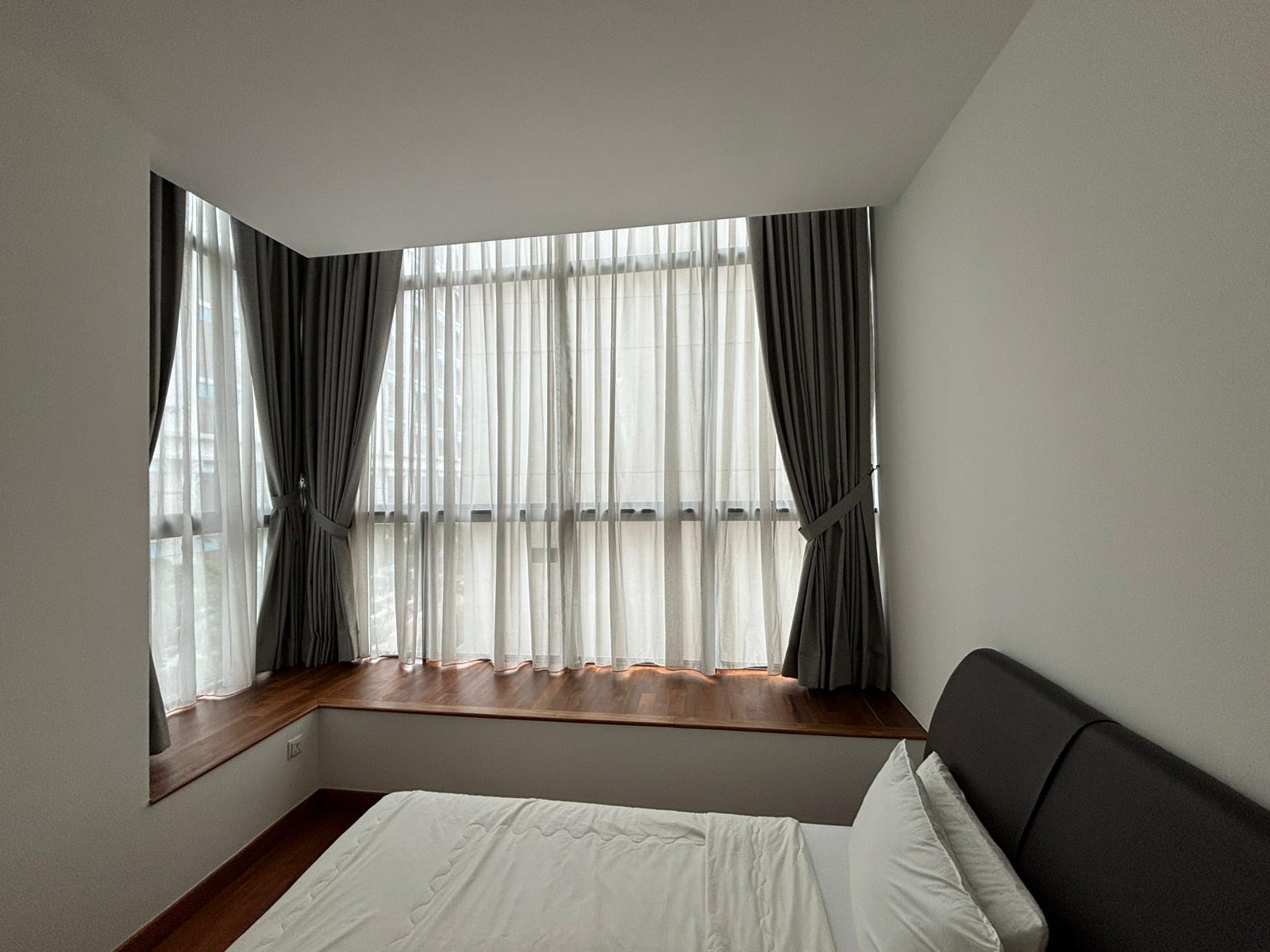
Curtain care in Singapore requires extra attention because of our humid climate, strong sunlight and year-round heat. Without regular cleaning and maintenance, curtains can collect dust, develop odours, fade from prolonged sunlight exposure or become vulnerable to mould in damp conditions.
The good news is that maintaining your curtains does not need to be complicated. This curtain care Singapore guide covers practical ways to clean different fabrics, reduce mould risk, protect curtains from sun exposure and keep both curtains and blinds looking their best for longer.
Always check the manufacturer’s care instructions before washing or treating curtain fabric, as cleaning requirements can vary significantly between materials and fabric constructions.
Why Curtain Care Matters in Singapore’s Humid Climate
Before getting into the how, it helps to understand why curtains in Singapore need more care than in temperate climates.
Humidity. Singapore’s average relative humidity sits between 70% and 90% for much of the year. This creates ideal conditions for mould and mildew to develop in fabric, particularly in rooms with poor ventilation or windows that are frequently left open during rain.
UV exposure. Our equatorial position means intense, year-round UV radiation. Curtains — especially those on south and west-facing windows — take a significant amount of direct sunlight daily. Over time, this causes fading, fabric weakening, and colour loss.
Dust and air quality. Urban environments accumulate dust quickly, and Singapore is no exception. Curtains trap airborne dust, pollen, and fine particles from outside. Left unattended, this can affect air quality inside your home and cause fabric deterioration.
Understanding these factors means you can take targeted steps to protect your investment.
Curtain Care Singapore: Regular Maintenance Tips
A good curtain care Singapore routine starts with regular dust removal, proper ventilation and cleaning methods suited to the specific fabric.
The single most effective thing you can do for your curtains requires no washing at all — simply shaking or vacuuming them regularly.
Vacuuming: Use the soft brush attachment on your vacuum cleaner and run it gently along the curtain fabric, working from top to bottom. Do this every two to four weeks, or more frequently in dusty rooms or homes near main roads. This prevents dust from embedding into the weave, which makes it progressively harder to remove.
Shaking: For lighter fabrics, remove the curtain from the track periodically and give it a gentle shake outdoors to dislodge surface dust. Do this on a dry, breezy day.
Airing: Open windows on dry days to allow airflow through the room and prevent moisture from building up in the fabric. Avoid leaving curtains bunched against the wall in damp conditions — a common cause of mildew forming at the base of curtain panels.
How to Wash Curtains Safely
How and how often you wash your curtains depends on the fabric. Always check the care label first — different materials have different requirements.
Machine-Washable Fabrics (Polyester, Cotton Blends)
Polyester and cotton-blend curtains are the most forgiving. Most can be machine washed on a gentle cycle with cold water.
- Use a mild detergent — avoid anything with bleach or optical brighteners, which can alter fabric colour over time.
- Wash curtains separately or in a large laundry bag to prevent them tangling.
- Do not overload the machine — curtains need room to move freely.
- Remove promptly after the cycle ends and hang immediately to dry. Do not leave them sitting wet in the drum.
- Air dry in a shaded, well-ventilated area rather than direct sunlight, which can cause shrinkage and fading.
Linen and Linen-Blend Fabrics
Linen requires more care. Hand washing in cool water with a gentle detergent is the safest option. If machine washing, use the delicate setting with cold water and place in a mesh laundry bag.
Do not wring linen fabric — squeeze gently to remove excess water and hang to dry immediately. Linen can shrink in hot water or tumble drying, so avoid both.
Velvet Curtains
Velvet should not be machine washed at home. The pile can be crushed or distorted by the washing motion. For velvet curtains, professional dry cleaning is the recommended approach. Between professional cleans, use a soft brush or low-suction vacuum to remove surface dust, always brushing in the direction of the pile.
Blackout-Lined Curtains
The blackout lining on these curtains is sensitive to heat and harsh detergents, which can cause the coating to crack or peel. Hand washing in cool water is safest. If machine washing, use the gentlest possible cycle and cold water only. Air dry flat or hanging — never tumble dry.
Sheer Fabrics
Sheers are delicate. Machine wash on the most gentle cycle available, in cold water, inside a mesh laundry bag. Hang immediately to dry — they are lightweight and will dry quickly. Iron on a very low setting if needed, or steam gently.
How to Prevent Mould and Mildew on Curtains
Mould is one of the most common curtain problems in Singapore homes, particularly in bedrooms with poor ventilation, bathrooms, or any room where windows are left open during humid weather.
Prevention is better than cure. Ensure good airflow in rooms, particularly overnight. Run the aircon or a dehumidifier in rooms that tend to feel damp. Keep curtain bases off the floor if your flat is prone to condensation.
If mould appears: For most fabric types, mix a solution of equal parts white vinegar and water. Dab — do not rub — the affected area with a soft cloth. Leave it to sit briefly, then blot clean with a damp cloth. Allow to dry fully in a well-ventilated area.
For severe mould, professional curtain cleaning is the safer option. Attempting to aggressively scrub moulded fabric at home can damage the weave and spread spores.
How to Clean and Maintain Blinds
Blinds require a different approach to curtains but benefit equally from regular attention.
Roller Blinds
Wipe the surface with a slightly damp microfibre cloth, working from top to bottom. For stubborn marks, use a small amount of mild detergent on the cloth. Avoid soaking the fabric — roller blind fabric is not designed to be fully immersed in water.
Do not roll a wet or damp blind up — always allow it to dry fully in the lowered position before retracting.
Venetian Blinds
Venetian blinds collect dust between the slats, which requires more attention. Use a microfibre cloth or a specialised blind-cleaning tool to wipe each slat individually. For deeper cleaning, remove the blind and wash with mild soapy water, rinse thoroughly, and hang to dry fully before reinstalling.
Combi and Zipblinds
For combi blinds, a dry microfibre cloth or gentle vacuum is usually sufficient for routine cleaning. For outdoor zipblinds, the fabric can typically be wiped down with a damp cloth to remove dirt and dust. Clean the zip tracks periodically with a dry brush to prevent debris build-up that can affect the mechanism.
Visit our blinds page or zipblind page for product-specific care guidance from our team.
Protecting Curtains Against Sun and UV Fading
Singapore’s sun is relentless, and UV fading is inevitable for curtains on south or west-facing windows that receive hours of direct sunlight daily. Here is how to slow it down.
Choose fade-resistant fabrics. When selecting curtains, ask about UV resistance. Polyester and solution-dyed fabrics hold their colour significantly better than natural fibres under prolonged UV exposure.
Use a sheer or solar blind as a buffer. Layering a solar blind or sheer curtain in front of your main curtains reduces the direct UV hitting the heavier fabric behind. This extends the life of your blackout or decorative curtain considerably.
Rotate curtains periodically. If your curtains are symmetrical and interchangeable (e.g. two identical panels on a large window), swapping them side-to-side periodically ensures even exposure and more uniform wear.
Keeping Your Curtains Fresh in Singapore
Explore our curtains collection or contact our team for advice on choosing suitable window treatments for your home.
Good curtain care in Singapore comes down to regular maintenance, proper ventilation and following the correct cleaning method for your particular fabric.
Vacuuming or dusting curtains regularly can help prevent dirt from building up, while keeping rooms well ventilated can reduce moisture around windows and fabrics. When deeper cleaning is required, always check the fabric care instructions before washing or applying cleaning products.
Blinds and outdoor Zipblinds also benefit from regular cleaning, particularly around tracks and moving components where dust and debris can accumulate.
If your existing curtains are heavily faded, damaged or no longer suitable for your home, Curtainmise Co offers custom-made curtains and blinds for Singapore homes.


